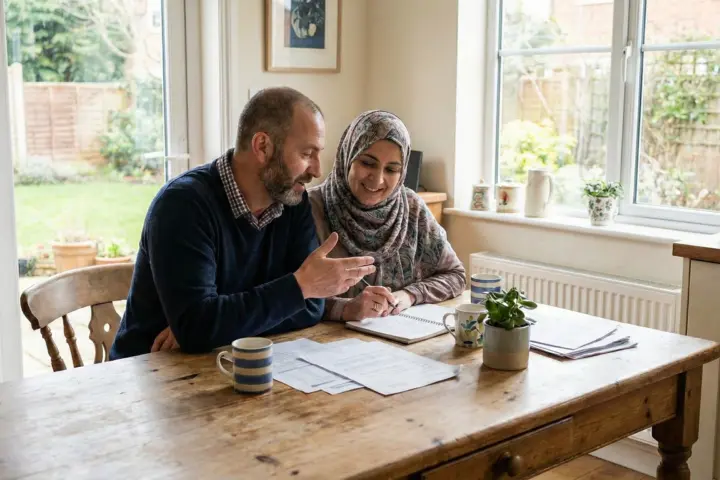
This is our summary of an article first published by ProductiveMuslim (written by Zaynab Chinoy). Read the full piece on their site.
Read on ProductiveMuslimThis piece speaks to Muslim couples in their own language, rooting everyday kindness in faith. It is honest about how easily spouses start taking each other for granted.
Key takeaways
- Notice the quiet ways your spouse helps you grow in character, not only in outward acts of worship.
- Thank your spouse daily for ordinary things that are easy to take for granted.
- Speak to your spouse with the warmth and courtesy you would give a close friend.
- Remember that both husbands and wives need love, respect and care, expressed in different ways.
What the article says
Chinoy opens with the Qur'anic description of spouses as a source of tranquility, with affection and mercy placed between them, and asks what contented Muslim couples do differently. Her first habit is loving each other for Allah's sake. She argues that people often feel let down when a spouse is less outwardly devout than hoped, yet overlook how that spouse helps them improve their character: discouraging backbiting and suspicion, and encouraging honesty, generosity and forgiveness. She cites a hadith on the weight of good character to show this is real spiritual growth.
“Happy Muslim couples talk like best friends, in good times and in conflict.”
Zaynab Chinoy
The second habit is gratitude. Over time, what once felt special, whether a husband's work or a wife's cooking, can come to be treated as mere duty. Referring to a hadith about thanking people and to verses on gratitude, she suggests simple practices: daily thanks, a note or message, small gifts, and even exchanging gratitude journals.
The third habit is talking like close friends. She contrasts curt messages between long-married spouses with the affectionate, perceptive communication between the Prophet ﷺ and Aisha, who said that even when upset she held back only his name. The fourth habit concerns each other's primary needs; she challenges neat gender lists and insists that men and women alike need love, respect and emotional and physical care. The full article goes on to describe further habits.
Why it matters for Muslim marriages
Many singles we speak with hope for a spouse who will help them grow closer to Allah, and imagine this mainly as shared worship. This article gently widens that picture: a spouse who helps you speak kindly, forgive, and let go of suspicion is also helping your faith. Gratitude and courteous speech sound small, but over years they shape the atmosphere of a home. For families looking for a match, these everyday qualities of character are worth asking about alongside education, background and religious practice.
Originally published by ProductiveMuslim. Summary and reflections by the BeyondChai team.